
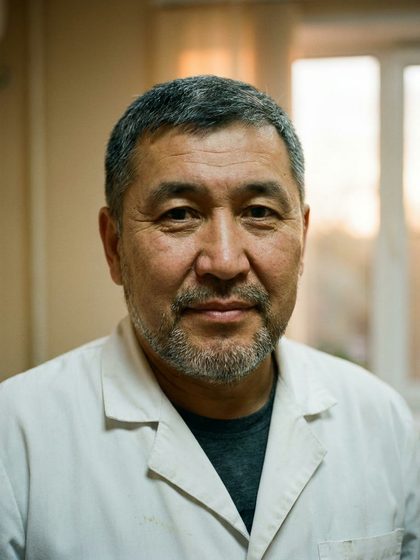
Reviewed byBaurzhan Kassymov, MDAddiction physician · updated 11.11.2026
Key facts
- Who provides care
- The clinic’s addiction physicians, psychiatrists, psychotherapists and psychologists; all staff members are bound by the duty of medical confidentiality
- Where
- Clinics in Almaty and Astana, home visits in unmarked cars and online consultations for other cities of Kazakhstan
- Duration
- Any stage — from a one-time consultation to a program lasting many months — can be completed anonymously
- Anonymity
- No registration in the state dispensary registry; information is disclosed only in cases expressly provided for by the law of the Republic of Kazakhstan
- When it is urgent
- If there is a threat to life — seizures, loss of consciousness, an overdose or suicidal thoughts — call 103 or 112
- Outcome
- The person receives full treatment without fear of exposure and decides for themselves whom to tell and what to say
What to know
The question I hear most often at a first consultation is not about treatment but about the consequences: “Will my employer find out? Will I lose my driver’s license? Will I be put on a registry?” Fear of exposure keeps people away from doctors for years, and during that time the illness has time to progress a long way. That is why I think it is important to explain in detail what anonymity really means, what it rests on and where its honest limits lie.
Anonymity at Akalam is not a promise that “no one will ever find out anything under any circumstances” but adherence to specific rules. We work on a paid basis with no registration in the state dispensary registry, information about the patient is protected by medical confidentiality under the Code of the Republic of Kazakhstan “On Public Health and the Healthcare System,” and it may be disclosed only in cases expressly provided for by law. Below I explain how this works in practice.
Who Needs Anonymous Addiction Treatment Most
- people whose work involves a security clearance, a professional license or driving vehicles
- those who fear the reaction of colleagues, managers or business partners
- public figures and people who live in a small town where everyone knows each other
- families who want to help a loved one without taking the problem outside the home
- people who have already been burned by exposure and therefore keep putting off seeing a doctor
- people who need a doctor to visit without a car marked with logos and flashing lights
- those who want to get an online consultation first without giving their name
If life is at risk — loss of consciousness, seizures, hallucinations, overdose, suicidal thoughts — call 103 or 112. Helpline for children and young people: 150.
Why Fear of Exposure Gets in the Way of Treatment and How Medical Confidentiality Works
The stigma surrounding addiction is one of the main reasons people do not see a doctor for years. A person fears not so much the illness itself as the label: losing their job, respect or driver’s license. As a result, treatment begins later, when there are already serious complications affecting the liver, heart and mental health. The anonymous format removes this barrier and allows people to seek help earlier, while it is still easier to help.
Medical confidentiality is the legal duty of the clinic and every staff member not to disclose information about a patient’s visit, diagnosis, treatment or condition. The law provides for exceptions: for example, requests from investigative authorities and courts in connection with a specific case, or the threat of dangerous infections spreading. Outside such cases, information is shared only with the patient’s own written consent.
How Anonymous Treatment Works: From the First Call to Discharge
The first contact can be made without giving your name: call or write to us, describe the situation and get an online consultation with a doctor. For the contract and medical records, minimal personal details will be needed — the paperwork procedure is explained in detail when you book. Home visits are made in an unmarked car, and the doctor wears ordinary clothes. In the hospital, there are private rooms, visitors are admitted only with the patient’s consent, and certificates and discharge summaries are issued to the patient in person or to someone holding their power of attorney.
Anonymity has honest limits. Minors are treated with the involvement of their legal guardians in accordance with the procedure established by law. If a person is already registered with a state medical organization, treatment at a private clinic does not by itself remove them from that registry. Involuntary treatment is possible only by court decision. And if there is a threat to life, call 103 or 112 — an ambulance matters more than any concerns.
How we help
Anonymous consultation and assessment
An addiction physician or psychiatrist conducts an interview and an examination and orders lab tests. The results are stored in the clinic’s medical records and are not transferred to state addiction registries. The patient receives an honest assessment of their condition and recommendations, and makes the decision about treatment themselves — without pressure and without the risk that outsiders will learn about the visit.
Anonymous home visits and inpatient care
If a person feels unwell and cannot travel, the doctor comes to their home without any identifying markings. If necessary, the patient is admitted to the Akalam hospital in Almaty or Astana, where strict confidentiality is maintained: no information is given to outsiders over the phone, visits are allowed only with the patient’s consent, and personal belongings and phones stay with the patient.
Anonymous psychotherapy and rehab
Individual and group sessions are held in a closed format, and group members agree to keep everything confidential. For residents of other cities of Kazakhstan, psychotherapy and follow-up support are available online, which further reduces the risk of running into acquaintances. Sessions are not recorded without the patient’s consent, and the psychotherapist’s notes are kept in confidential medical records.
Working with the family discreetly
Relatives can get a consultation with an addiction physician or psychologist even if the person is not yet ready for treatment. We do not tell the patient or third parties who exactly contacted us unless this has been agreed in advance, and we help the family plan the conversation so that the person agrees at least to an examination and does not feel betrayed.
How treatment works
- 01Call or WhatsAppThe administrator and the doctor on duty clarify the situation and tell you what to do right now.
- 02Examination or consultationThe doctor visits your home, sees you at the clinic or joins by video.
- 03Treatment planWe choose the format — at home, inpatient, psychotherapy or rehab — with a clear price.
- 04Ongoing supportYour doctor and psychotherapist stay in touch: follow-ups, family support and relapse prevention.
Myths and facts
MythAnonymous treatment is lower quality
FactAnonymity applies only to patient data, not to the scope of care. Assessment, detox, psychotherapy and rehab follow the same clinical protocols of the Ministry of Health of the Republic of Kazakhstan and international guidelines as with standard registration.
MythWith anonymous treatment, you do not have to tell the doctor the truth
FactQuite the opposite: medical confidentiality exists precisely so that the patient can honestly say what they use, how much and for how long. Without this information, the doctor cannot choose treatment safely or prevent complications.
MythA private clinic can put you on a registry and inform your employer
FactPaid anonymous treatment is provided with no registration in the state dispensary registry. The clinic has no right to inform your employer about treatment: information is disclosed only in cases expressly provided for by law or with the patient’s written consent.
Prices: Confidential addiction treatment
| Confidential addiction treatment | 20 000 ₸ |
| Addiction doctor home visit: examination and advice | 20 000 ₸ |
| Repeat IV drip the next day | 20 000 ₸ |
| 24 hours in the inpatient unit | 45 000 ₸ |
| Phone consultation | free |
Prices are approximate: the doctor confirms the exact cost after the examination, before treatment starts.
Confidential
We do not register patients with state dispensaries or share information with employers. You do not have to give your surname; doctors arrive in unmarked cars. Medical confidentiality is protected by the Code of Kazakhstan “On Public Health and the Healthcare System”.
Clinic addresses
FAQ
Do I need to show an ID card?
Minimal personal details will be needed for the contract and medical records; the exact procedure is explained when you book. An initial consultation by phone or online is possible without giving your name. All information is stored at the clinic and is protected by medical confidentiality.
Will my employer find out about the treatment?
No, unless you decide to tell them yourself. The clinic does not share information with your workplace, and sick-leave certificates and other documents are issued only at the patient’s request. Information is disclosed only in cases expressly provided for by the law of the Republic of Kazakhstan.
Will treatment affect my driver’s license?
Anonymous treatment at a private clinic does not lead to registration in the state dispensary registry. That said, the medical examination required to obtain a driver’s license follows its own rules, and if a person is already registered, private treatment does not remove them from the registry. The doctor will explain the details during the consultation.
Can relatives find out the details of treatment?
Only with the patient’s consent. We do not confirm over the phone whether a person is at the clinic and do not discuss their condition without permission. The exception is minors, whose treatment is carried out with the involvement of their legal guardians.
Is anonymity preserved during an online consultation?
Yes. The consultation takes place over a secure channel and is not recorded without the patient’s consent. Online care is suitable for an initial assessment, talking with the family and follow-up support, but withdrawal treatment and IV drips require an in-person examination.
What if the person is a danger to themselves or others?
If there is a threat to life, call 103 or 112 right away — anonymity is not the priority here. Involuntary hospitalization is possible only under the procedure established by the law of the Republic of Kazakhstan, by court decision. The clinic does not use force and does not “take people away.”
Sources and review
Prepared by the Akalam medical editorial team based on:
- ICD-10 and ICD-11: mental and behavioural disorders
- Clinical protocols of the Ministry of Health of Kazakhstan
- Code of Kazakhstan “On Public Health and the Healthcare System”
- WHO: mental health and substance use
- NICE and APA clinical guidelines
This information is for reference and does not replace a doctor's consultation. Editorial policy