
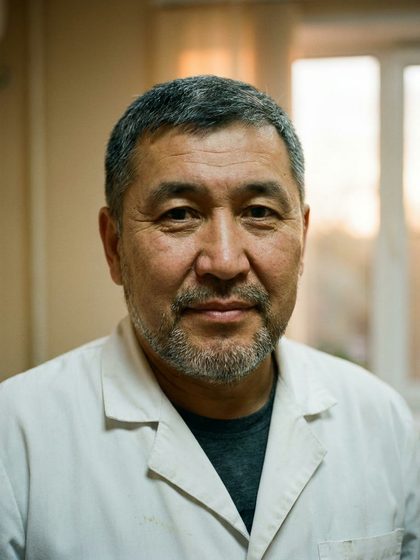
Reviewed byBaurzhan Kassymov, MDAddiction physician · updated 11.11.2026
Key facts
- ICD-10 code
- F11.3
- Who provides care
- An addiction physician and a nurse; if mental health problems arise, a psychiatrist joins the team
- Where
- Mainly inpatient care in Almaty and Astana; outpatient care only when the patient is stable and under a doctor’s supervision
- Duration
- The acute period lasts from a few days to 1–2 weeks depending on the substance and length of use; residual symptoms last longer
- Anonymity
- Anonymous, with no registration in the state narcology dispensary registry; medical confidentiality under the law of the Republic of Kazakhstan
- When it is urgent
- Seizures, confusion, hallucinations, chest pain or suicidal thoughts — call 103 or 112
- Outcome
- Getting through acute withdrawal without complications and being ready for the next stage of treatment
What to know
What people commonly call “lomka” (being dope-sick) is withdrawal syndrome — the condition that develops when a person with addiction stops using a substance. In ICD-10 it is coded with the fourth character “.3” in categories F11–F19; for opioids it is F11.3. The person feels aching in the muscles and joints, chills, sweating, anxiety, insomnia, nausea and an overwhelming craving. The condition is severe and agonizing, and it is during these very days that many people go back to the drug to relieve their suffering.
The doctor’s task is to guide the person through this period safely and as gently as possible. At Akalam, we do not promise a “painless detox in 24 hours”: we explain honestly that there will be symptoms, but they can be significantly eased and complications can be prevented. And most importantly, I always tell patients that withdrawal treatment is only the first door, behind which real addiction treatment begins — and we start preparing the person for it while they are still on the ward.
Symptoms of Drug Withdrawal Syndrome
- aching in the muscles, joints and lower back, a feeling that the body is being “twisted”
- alternating chills and fever, heavy sweating, goosebumps
- runny nose, watery eyes, frequent yawning and sneezing, as with a bad cold
- nausea, vomiting, cramps and abdominal pain, diarrhea, loss of appetite
- insomnia, restlessness, inability to sit still
- intense anxiety, irritability, low mood and outbursts of anger
- persistent thoughts about the drug and a strong urge to start using again
If life is at risk — loss of consciousness, seizures, hallucinations, overdose, suicidal thoughts — call 103 or 112. Helpline for children and young people: 150.
Why Withdrawal Happens and Why “Going Cold Turkey” at Home Is Dangerous
With regular use, the body adapts to the constant presence of the substance and changes how its own regulatory systems work. When the substance stops coming in, these systems cannot readjust in time, and a rebound effect sets in: pain, agitation, digestive problems and sleep disturbances. How severe withdrawal is depends on the substance, the length of use, other medical conditions and the overall exhaustion of the body.
Trying to get through withdrawal alone is dangerous not only because of the suffering. Vomiting and diarrhea lead to dehydration, weakened people may develop heart rhythm problems, and withdrawal from certain substances can cause seizures and psychosis. The most serious risk is an overdose after relapse: after a few days without the drug, tolerance drops, and the usual amount can become fatal. That is why withdrawal is best managed under medical supervision.
How Withdrawal Treatment Works at the Clinic
Before admission, you can call or contact us online: the doctor will ask when the drug was last used, which substances and medications were taken and whether there are chronic illnesses. On admission, the addiction physician examines the patient, measures blood pressure, pulse and oxygen saturation, performs an ECG and takes blood samples. Then treatment is prescribed: IV fluid therapy to replace lost fluids, medications to relieve pain, nausea and anxiety and improve sleep, and monitoring of vital signs several times a day.
Withdrawal treatment at home is possible only in mild cases, when substances have not been combined, there are no serious illnesses and a responsible adult is nearby — and this is decided by the doctor after an examination. Inpatient care is needed for seizures, psychotic symptoms, pregnancy, heart disease and serious infections. An online consultation does not replace an examination. In case of loss of consciousness or breathing problems, call 103 or 112 right away.
How we help
IV fluids and symptom relief
IV solutions replace lost fluids and electrolytes and support kidney and liver function. Separately, the doctor chooses medications for nausea, muscle and abdominal pain and bowel problems. All medications are prescribed by group, according to indications and taking other conditions into account — no self-treatment and no “home” regimens.
Managing anxiety and sleep
Anxiety and insomnia are among the hardest withdrawal symptoms. The doctor may prescribe calming and sleep medications, including benzodiazepines — only by prescription, under supervision and as a short course, so as not to create a new dependence. The calm environment of the ward, with medical staff close at hand, also helps.
Monitoring and preventing complications
During the acute period, a nurse regularly checks blood pressure, pulse, temperature and level of consciousness. This makes it possible to spot the onset of psychosis, heart rhythm problems or dehydration in time and adjust treatment immediately. It is this constant monitoring that distinguishes medically supervised withdrawal from trying to “tough it out” at home, where there is no one with medical knowledge nearby.
Moving on to addiction treatment
Toward the end of the acute period, a psychotherapist visits the patient and we discuss what comes next. The doctor explains the options for relapse-prevention support, rehab and outpatient follow-up. Without this stage, withdrawal treatment remains just a breather, after which drug use often resumes within the first weeks after discharge.
How treatment works
- 01Call or WhatsAppThe administrator and the doctor on duty clarify the situation and tell you what to do right now.
- 02Examination or consultationThe doctor visits your home, sees you at the clinic or joins by video.
- 03Treatment planWe choose the format — at home, inpatient, psychotherapy or rehab — with a clear price.
- 04Ongoing supportYour doctor and psychotherapist stay in touch: follow-ups, family support and relapse prevention.
Myths and facts
MythWithdrawal can be stopped with a single IV drip
FactAn IV drip eases the condition, but withdrawal syndrome lasts for days. Promises of relief “in a couple of hours” should raise a red flag: rapidly suppressing symptoms without monitoring can be dangerous, and the craving does not go away afterward.
MythIt is better to ride it out at home — it is not life-threatening
FactWithdrawal from some substances comes with seizures, psychosis and severe dehydration. But the main risk is an overdose after relapse, when tolerance has already dropped. Under a doctor’s supervision, these dangers are much lower.
MythOnce withdrawal is over, the addiction is gone
FactPhysical symptoms fade, but psychological cravings remain for months. That is why withdrawal treatment must be followed by the next stage — psychotherapy, relapse-prevention support and rehab, which help maintain the result.
Prices: Drug withdrawal treatment
| Drug withdrawal treatment | 50 000 ₸ |
| Addiction doctor home visit: examination and advice | 20 000 ₸ |
| Repeat IV drip the next day | 20 000 ₸ |
| 24 hours in the inpatient unit | 45 000 ₸ |
| Phone consultation | free |
Prices are approximate: the doctor confirms the exact cost after the examination, before treatment starts.
Confidential
We do not register patients with state dispensaries or share information with employers. You do not have to give your surname; doctors arrive in unmarked cars. Medical confidentiality is protected by the Code of Kazakhstan “On Public Health and the Healthcare System”.
Clinic addresses
FAQ
How long does withdrawal last?
The acute period usually lasts from a few days to one or two weeks, depending on the substance, the length of use and the person’s health. Afterward, weakness, insomnia and mood swings may persist. The doctor explains what to expect after the examination and adjusts treatment along the way.
Can withdrawal be treated at home?
Only in mild cases and after an in-person examination by a doctor, when there are no serious illnesses, no combination of substances and a responsible person is nearby. In most cases, a hospital is safer, where a nurse monitors the patient around the clock.
Will it hurt?
Unpleasant sensations cannot be removed completely, but doctors significantly ease pain, nausea, anxiety and insomnia. We explain to the patient in advance what to expect — this reduces fear and helps them get through the acute period.
What should I bring to the hospital?
An ID document for the contract, comfortable clothing, toiletries, a list of medications you take and medical records if you have them. Tell the doctor honestly what was used and when: this is needed not to judge you but to choose treatment safely.
Will the police or my employer be told about the treatment?
No. Akalam works anonymously, with no registration in the state dispensary registry. Patient information is protected by medical confidentiality under the Code of the Republic of Kazakhstan “On Public Health and the Healthcare System” and is disclosed only in cases expressly provided for by law.
The person refuses to go to the clinic. What should we do?
An adult cannot be treated without consent, except by court decision. Book a family consultation: the doctor will suggest how to have a calm conversation. If the condition is life-threatening — loss of consciousness, seizures, slow breathing — call 103 or 112.
Sources and review
Prepared by the Akalam medical editorial team based on:
- ICD-10 and ICD-11: mental and behavioural disorders
- Clinical protocols of the Ministry of Health of Kazakhstan
- Code of Kazakhstan “On Public Health and the Healthcare System”
- WHO: mental health and substance use
- NICE and APA clinical guidelines
This information is for reference and does not replace a doctor's consultation. Editorial policy