
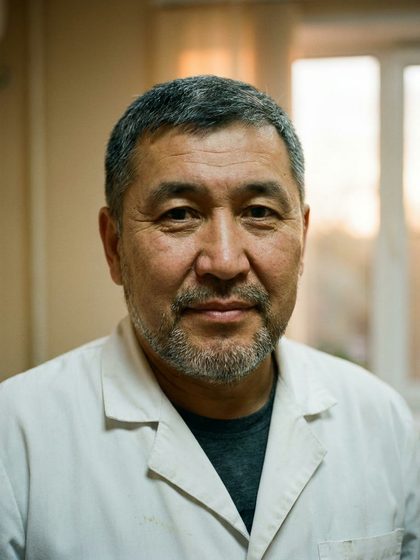
Reviewed byBaurzhan Kassymov, MDAddiction physician · updated 11.11.2026
Key facts
- ICD-10 code
- F10.3
- Who provides care
- a psychiatrist–addiction physician from the home-visit team, accompanied by a nurse when needed
- Where
- an apartment, private house or dacha in Almaty, Kaskelen, Talgar, Boraldai, Otegen Batyr and the foothills
- Duration
- the visit itself takes 2–3 hours, including about 1–2 hours for the IV drip; in severe cases, a repeat visit the next day
- Anonymity
- we arrive in unmarked clothing and vehicles, no information goes to your employer, and you are not placed on any registry
- When it is urgent
- seizures, confusion, hallucinations, chest pain, vomiting blood — call 103 or 112 immediately, do not wait for the addiction physician
- Outcome
- less tremor, nausea and anxiety, the ability to fall asleep, a plan for the next few days and a discussion of further treatment
What to know
Calls asking for help to stop a drinking binge in Almaty most often come late at night or early in the morning: relatives have spent several days trying to cope on their own, and now the person’s hands are shaking, they cannot sleep and cannot eat. The first thing the Akalam home-visit physician does is ask a few questions over the phone — how many days the binge has lasted, whether there have been seizures or “visions,” what chronic conditions the person has, and what they have already taken. The answers determine whether the addiction physician comes to the home or recommends inpatient care straight away.
Travel time across the city depends more on traffic than on distance. In the evening rush hour, the drive from the city center to the Alatau or Nauryzbay district can take more than an hour, while at night we reach the Medeu, Bostandyk or Auezov district much faster. For Kaskelen, Talgar, Boraldai, Otegen Batyr and the dacha settlements in the foothills, we plan around highway conditions; the dispatcher gives you a realistic arrival time instead of promising “15 minutes.”
When to call an addiction physician to your home
- the binge has lasted more than two or three days and the person cannot stop on their own
- in the morning the hands shake, and sweating and a racing heart only ease after another drink
- nausea and vomiting make it impossible to eat or keep water down
- this is the second night without sleep, and the person paces the apartment unable to settle
- blood pressure is spiking, especially in people over 45 or with hypertension
- relatives are afraid to leave the person alone overnight
- the person agrees to a check-up at home but refuses to go to a clinic
If life is at risk — loss of consciousness, seizures, hallucinations, overdose, suicidal thoughts — call 103 or 112. Helpline for children and young people: 150.
Why stopping a binge on your own is dangerous
With daily drinking, the nervous system adapts and starts working under constant suppression by alcohol. When the supply suddenly stops, withdrawal sets in: anxiety, tremor, swings in blood pressure and heart rate, insomnia. Trying to “treat” it with a morning beer only postpones it. Dehydration from vomiting and sweating adds to the weakness and to heart rhythm problems, and without a doctor’s supervision it is hard to notice the moment when the condition becomes dangerous.
A typical family mistake is giving the person sleeping pills or sedatives from the home medicine cabinet. Combined with alcohol, they can suppress breathing. It is just as dangerous for someone who has had seizures or delirium before to stop drinking abruptly after a long binge: in the first 2–3 days, the risk of recurrence is high. That is why the addiction physician assesses not only how the person feels right now but also their history of previous binges, to decide whether home treatment is safe.
How a home visit by an addiction physician works
Before the team arrives, the dispatcher confirms the address, entrance and landmarks — in the microdistricts of the Auezov district and the private-house areas of Turksib district, this saves time. Relatives are asked to find medical records and a list of the medications the person takes regularly. On site, the doctor talks with the patient, measures blood pressure, pulse, oxygen saturation and blood sugar, and records an ECG when indicated. Then the doctor sets up the IV drip and monitors the response. At the end, the doctor explains to the family what to do overnight and the following day.
Home treatment is not provided if there are seizures, hallucinations or disorientation, if the binge has lasted more than 10–14 days, if there is serious heart or liver disease or poorly controlled diabetes, or if the person is heavily intoxicated, aggressive or refuses to be examined. In these cases the doctor will recommend inpatient care, and if there is a threat to life, calling 103 or 112. We cannot treat an adult against their will.
How we help
Examination and risk assessment
The addiction physician finds out how long the binge has lasted, how much has been drunk, whether there have been seizures or delirium in the past, and what other conditions are present. The doctor measures blood pressure, pulse, oxygen saturation and blood sugar, and rates tremor, sweating and anxiety using a standard clinical withdrawal scale. This makes it possible to decide whether a single IV drip at home is enough or whether inpatient observation is needed.
IV fluid therapy
The IV drip is tailored to the individual: detox and saline solutions to replace fluids, B vitamins — especially thiamine to protect the nervous system — and, when indicated, liver-support medications and agents to support the heart. The doctor chooses the volume and infusion rate based on blood pressure, age and body weight. Medications to relieve anxiety and reduce seizure risk are prescribed only by a doctor and only after an examination.
Monitoring and recommendations
During the IV drip, the doctor stays close by and keeps track of blood pressure and well-being. After the procedure, the doctor leaves the family a clear plan: what to drink and eat, how to arrange sleep, and which signs require a repeat call or calling 103. If needed, we arrange a follow-up visit the next day — withdrawal is often felt more strongly on the second or third day.
Talking about further treatment
Detox relieves the acute condition but does not treat the addiction. Once the person has recovered a little, the addiction physician calmly discusses the next steps: a consultation at the Akalam clinic, psychotherapy, alcohol “coding” (a treatment widely used in Kazakhstan and CIS countries) after the required period of sobriety, or outpatient rehab. The decision always belongs to the patient; the doctor’s job is to provide information and not miss the moment when the person is ready to listen.
How treatment works
- 01Call or WhatsAppThe administrator and the doctor on duty clarify the situation and tell you what to do right now.
- 02Examination or consultationThe doctor visits your home, sees you at the clinic or joins by video.
- 03Treatment planWe choose the format — at home, inpatient, psychotherapy or rehab — with a clear price.
- 04Ongoing supportYour doctor and psychotherapist stay in touch: follow-ups, family support and relapse prevention.
Myths and facts
MythOne IV drip is enough to end any binge
FactAfter a long binge, withdrawal unfolds over 3–5 days, and it often peaks on the second or third day. One drip eases the condition, but sometimes a repeat visit or inpatient care is needed. The doctor will tell you honestly which option fits.
MythYou can call the doctor while the person is still drinking, and they will sober up instantly
FactStarting an IV drip during heavy intoxication is risky: the body’s reaction is unpredictable. The doctor usually asks for a break of several hours without alcohol. If the person is unconscious or breathing slowly, you need 103, not an addiction physician.
MythIf a doctor comes to the home, the neighbors and the employer will find out
FactOur team arrives in ordinary clothes in an unmarked car. Information about the visit is protected by medical confidentiality under the Code of the Republic of Kazakhstan “On Public Health and the Healthcare System,” and patients receiving anonymous paid treatment are not placed on the state dispensary registry.
Prices: Alcohol detox at home
| Alcohol detox at home | |
| Addiction doctor home visit: examination and advice | 20 000 ₸ |
| Repeat IV drip the next day | 20 000 ₸ |
| 24 hours in the inpatient unit | 45 000 ₸ |
| Phone consultation | free |
Prices are approximate: the doctor confirms the exact cost after the examination, before treatment starts.
Confidential
We do not register patients with state dispensaries or share information with employers. You do not have to give your surname; doctors arrive in unmarked cars. Medical confidentiality is protected by the Code of Kazakhstan “On Public Health and the Healthcare System”.
Clinic addresses
FAQ
How quickly will an addiction physician arrive in Almaty?
It depends on the district and the time of day. At night and on weekends we reach central areas noticeably faster, while during the weekday evening rush hour the drive to outlying microdistricts or to Kaskelen can take more than an hour. The dispatcher gives you a realistic time that accounts for traffic and keeps you updated if the team is delayed.
Does the person themselves need to consent?
Yes. An adult cannot be treated without their consent, even if relatives ask for it. Often the person agrees at least to an examination and a blood pressure check, and then to the IV drip. If they refuse and there is a threat to life, call 103 or 112.
How long should the person go without drinking before the doctor arrives?
Ideally several hours, so the doctor can assess the condition without heavy intoxication. The addiction physician will specify the exact time over the phone based on the length of the binge and how the person feels. Do not give the person sleeping pills or sedatives before the examination.
What should we prepare for the visit?
Clear some space next to the bed or sofa, and have ready any documents about chronic conditions, a list of regular medications, a clean towel and water. If you live in a private-house area or at a dacha in the foothills, describe the route in advance and turn on the light at the gate.
Do you travel to dachas and suburbs?
Yes, to Kaskelen, Talgar, Boraldai, Otegen Batyr and the dacha settlements in the foothills. Keep in mind that in winter and on weekends the highway can be congested, so it is better to call early rather than waiting until night. If the condition is severe and you are far from the city, it is safer to call 103 right away.
What if the condition worsens at night after the doctor leaves?
Call the same number back — the doctor will advise you on what to do and, if necessary, come again. If seizures, hallucinations, confusion, chest pain or vomiting blood appear, call 103 or 112 immediately without wasting time waiting.
Sources and review
Prepared by the Akalam medical editorial team based on:
- ICD-10 and ICD-11: mental and behavioural disorders
- Clinical protocols of the Ministry of Health of Kazakhstan
- Code of Kazakhstan “On Public Health and the Healthcare System”
- WHO: mental health and substance use
- NICE and APA clinical guidelines
This information is for reference and does not replace a doctor's consultation. Editorial policy