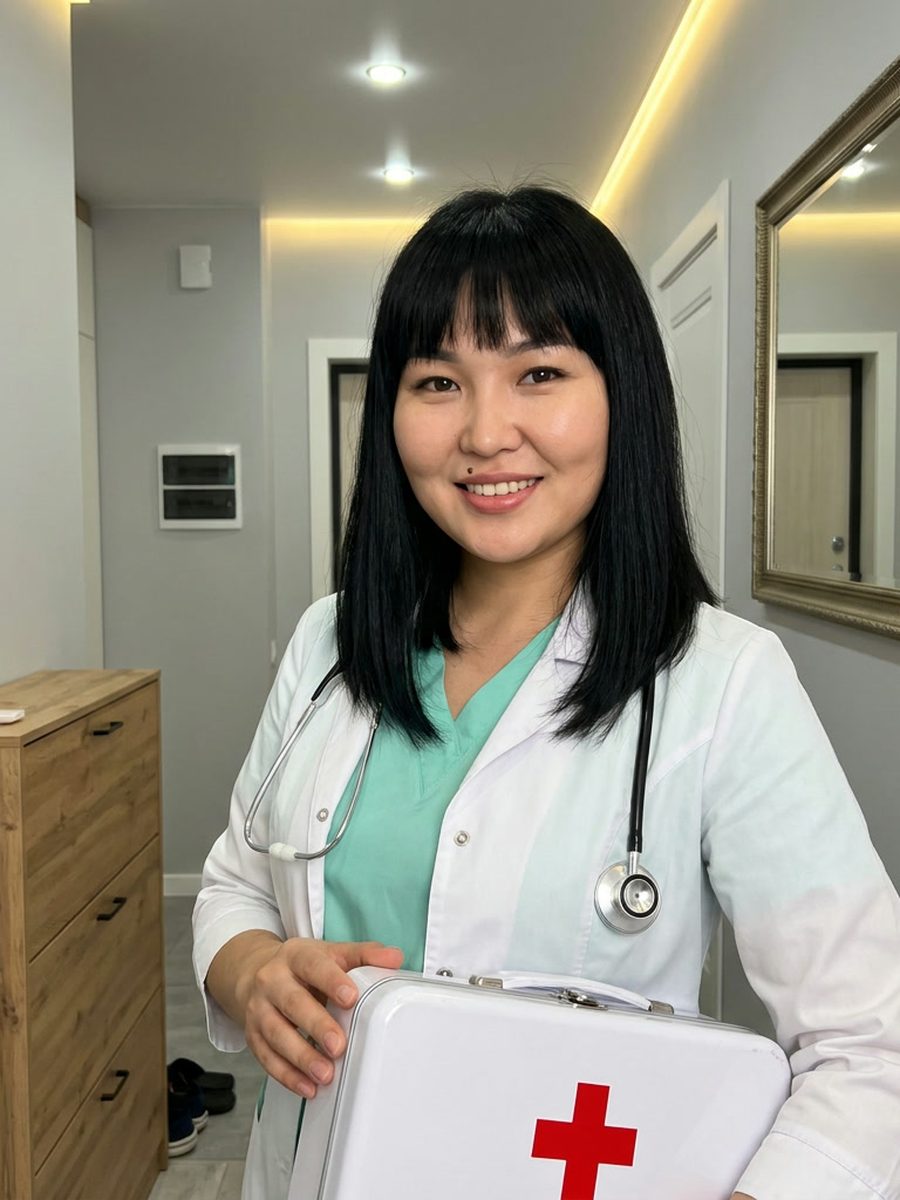
Reviewed byBaurzhan Kassymov, MDAddiction physician · updated 11.11.2026
Key facts
- ICD-10 code
- F10.2
- Who provides care
- a psychotherapist (a medical doctor) or a psychiatrist–addiction physician trained in suggestive psychotherapy
- Where
- the psychotherapist’s office at the clinic in Almaty; the session is held in person only, not online
- Duration
- a preliminary consultation of about an hour and a session of 1.5–2 hours; the duration of the commitment is discussed with the doctor
- Anonymity
- anonymous, with no registry entry; information about the session is protected by medical confidentiality
- When it is urgent
- the session is not held during a binge or withdrawal; in a serious condition, binge detox comes first, and if life is at risk, call 103
- Outcome
- a stronger commitment to sobriety when motivation is high, and time to work on the causes of the dependence
What to know
The Dovzhenko method is psychotherapy, not a medication-based procedure. Its essence is suggestive influence, meaning influence based on suggestion, delivered while the person is in a state of heightened emotional receptiveness. The doctor reinforces the person’s own decision not to drink and creates a sense that drinking alcohol is unacceptable for them. It is important to understand that the method does not physically “switch off” cravings and does not create a chemical reaction the way medication-based coding does.
In Almaty, this method is most often chosen by people for whom medications are contraindicated because of liver or heart disease or allergies, or by those who flatly refuse injections and implants. Sometimes they are people who have already had medication-based coding and want a different format. We are honest with you: the evidence base for the method is limited, and it is not part of the standard of care in international guidelines from NICE and the WHO. At Akalam, we view it as one part of comprehensive treatment, not as a stand-alone guarantee.
Who the Dovzhenko method may be right for
- the person has firmly decided to stop drinking and is looking for support for that decision
- medication-based methods are contraindicated because of heart or liver disease
- there is fear of or aversion to injections, implants and pills
- at least 10–14 days of sobriety have been completed and there is no withdrawal
- there is no history of serious psychiatric disorders, epilepsy or seizures
- the person trusts the doctor and is receptive to psychotherapeutic work
- the person is ready to continue with support after the session, such as psychotherapy or groups
If life is at risk — loss of consciousness, seizures, hallucinations, overdose, suicidal thoughts — call 103 or 112. Helpline for children and young people: 150.
How the method works and why motivation matters
The method relies on the mechanisms of suggestion and emotional experience. During the session, the doctor creates a state of heightened focus and receptiveness, links giving up alcohol to the person’s values, such as family, work and health, and builds a lasting internal prohibition. The effect depends on how much the person truly wants to be sober and how much they trust the specialist. If they came only because relatives insisted, the suggestion usually does not take hold.
The strength of the method is the absence of a medication burden and chemical risks. Its weakness is that the result depends on the patient’s personality and expectations, and that its scientific evidence is limited compared with craving-reducing medications and cognitive behavioral therapy (CBT). That is why we recommend combining the session with follow-up psychotherapy: it helps a person understand in which situations cravings arise and teaches them to cope without alcohol.
How a Dovzhenko coding session works
The first consultation can be held online: the doctor will ask about binges, health, motivation and expectations, explain how the method works and tell you how long you need to stay sober. Next comes an in-person meeting at the clinic in Almaty. The doctor performs an examination and talks with you, checks for contraindications, and the patient signs an informed consent form. The session itself is held one-on-one in a calm setting, with no outsiders present. At the end, the doctor formulates the commitment and agrees on its duration, followed by an agreement on follow-up meetings.
The session is not held while the person is intoxicated, on a binge or in withdrawal, if the period of sobriety is shorter than required, or in cases of serious psychiatric disorders, epilepsy, severe heart disease during a flare-up, or pregnancy, and never without the patient’s consent. The session is not held online, since in-person attendance is required. If a person on a binge has life-threatening symptoms, call 103 or 112 first and return to the question of coding later.
How we help
Preparatory consultation
The doctor learns about the person’s drinking history, past attempts to quit, state of health and, above all, motivation. The discussion covers why the person wants to be sober and what will change if they succeed. This conversation is part of the psychotherapy in itself: the person states their decision out loud. If the doctor sees that motivation is insufficient, they may suggest starting with a different kind of work.
Suggestive session
The session takes place in the calm setting of the doctor’s office. The doctor uses direct and indirect suggestion techniques and builds in the patient an emotionally charged image of a sober life and an aversion to alcohol. This is not hypnosis in the everyday sense and not a “switching off” of consciousness: the person hears and understands what is happening. At the end, the duration of the commitment is agreed.
Combination with other methods
The Dovzhenko method can be combined with craving-reducing medications, if there are no contraindications, and with cognitive behavioral therapy. This approach addresses both the psychological and the biological sides of dependence. The decision to combine methods is made with the doctor, based on the person’s health, test results and preferences.
Support after the session
The first months after coding are the period of highest risk. Akalam offers follow-up meetings, psychotherapy, family work and mutual support groups. If cravings appear or there are doubts about the strength of the commitment, it is better to see the doctor early than to “test” it at a holiday party or a toi. Meetings can be scheduled at a convenient time so you do not have to cross the whole city in rush hour.
How treatment works
- 01Call or WhatsAppThe administrator and the doctor on duty clarify the situation and tell you what to do right now.
- 02Examination or consultationThe doctor visits your home, sees you at the clinic or joins by video.
- 03Treatment planWe choose the format — at home, inpatient, psychotherapy or rehab — with a clear price.
- 04Ongoing supportYour doctor and psychotherapist stay in touch: follow-ups, family support and relapse prevention.
Myths and facts
MythThe Dovzhenko method is hypnosis, and the person remembers nothing afterward
FactThe session takes place while the person is fully conscious; they hear the doctor and understand what is happening. Suggestion is used in a state of heightened receptiveness, not a “blackout.” Nothing is hidden from the patient.
MythAfter the session, it is physically impossible to drink
FactThe method does not create a chemical reaction. A person can physically drink, but the commitment creates an internal prohibition. If it is broken, the person should see a doctor and work through the relapse rather than wait for “consequences.”
MythThe method works the same way for everyone
FactThe effect depends largely on motivation, personality and trust in the doctor. For some people the commitment holds for a long time; for others it weakens quickly. That is why ongoing work matters, not just the session.
Prices: Dovzhenko method
| Dovzhenko method | 35 000 ₸ |
| Addiction doctor home visit: examination and advice | 20 000 ₸ |
| Repeat IV drip the next day | 20 000 ₸ |
| 24 hours in the inpatient unit | 45 000 ₸ |
| Phone consultation | free |
Prices are approximate: the doctor confirms the exact cost after the examination, before treatment starts.
Confidential
We do not register patients with state dispensaries or share information with employers. You do not have to give your surname; doctors arrive in unmarked cars. Medical confidentiality is protected by the Code of Kazakhstan “On Public Health and the Healthcare System”.
Clinic addresses
FAQ
How long do I need to stay sober before the session?
Usually at least 10–14 days, so that the mind is clear and withdrawal has passed. Sometimes the doctor recommends a longer period. If the person is currently on a binge, binge detox is done first, followed by the required period of sobriety.
Can the session be done online?
No. You can have the preliminary consultation online, ask questions and discuss contraindications, but the session itself is held in person only. Personal contact, a calm setting and the doctor’s observation of the patient’s condition are essential to the method.
How is the Dovzhenko method different from medication-based coding?
No medications are administered, so there is no chemical reaction with alcohol and none of the medical risks that come with it. The work takes place at the psychological level, through suggestion and motivation. On the other hand, the result depends more heavily on the person’s own desire and their receptiveness to psychotherapy.
For how long is the coding done?
The duration is discussed with the doctor and the patient. It is important that it be realistic and backed up by further treatment. We do not promise sobriety “forever”: the method provides time and support, and making the result last depends on the work done after the session.
Should a relative attend the session?
The session itself is held one-on-one, and outsiders are usually not present. Relatives can come to a separate consultation, where the doctor will explain how to support the person after the session and how to behave at family celebrations.
What if the person drinks after the session anyway?
This is a reason to see the doctor, not to blame the person. A relapse does not mean treatment is pointless: it is worth working out what led to it and choosing further help, such as psychotherapy, craving-reducing medications or rehab. If the person’s condition is serious, call 103.
Sources and review
Prepared by the Akalam medical editorial team based on:
- ICD-10 and ICD-11: mental and behavioural disorders
- Clinical protocols of the Ministry of Health of Kazakhstan
- Code of Kazakhstan “On Public Health and the Healthcare System”
- WHO: mental health and substance use
- NICE and APA clinical guidelines
This information is for reference and does not replace a doctor's consultation. Editorial policy