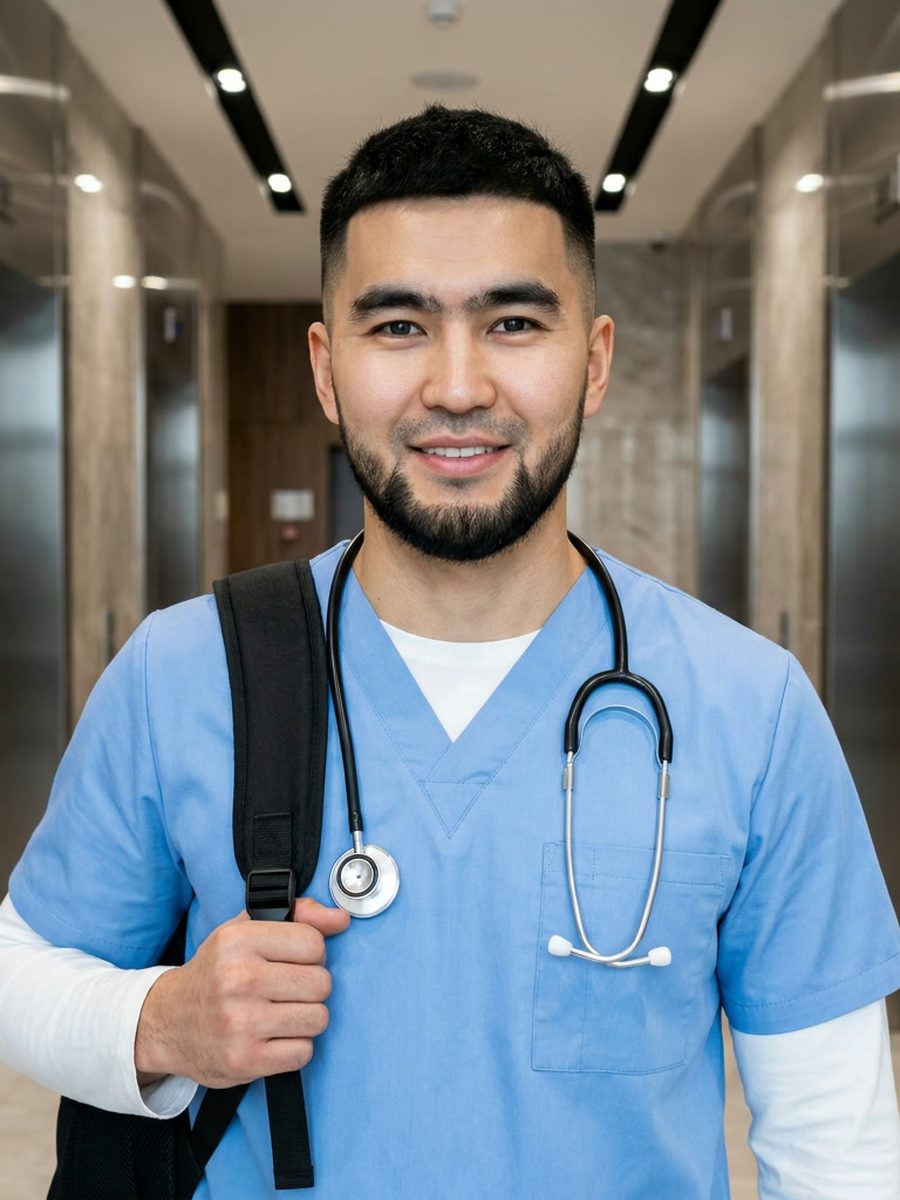

Reviewed byTimur Abdrakhmanov, MDPsychotherapist · updated 11.11.2026
Key facts
- ICD-10 code
- F11–F19
- Who provides care
- an addiction physician, a psychiatrist, psychotherapists, psychologists, and chemical dependency counselors
- Where
- a residential rehab unit in Almaty with round-the-clock staff supervision
- Duration
- the inpatient block usually lasts at least 2–3 months, followed by outpatient support for up to a year
- Anonymity
- paid, anonymous treatment with no registration at the state dispensary; all information is protected by medical confidentiality
- When it is urgent
- signs of overdose, seizures, loss of consciousness, psychosis, or suicidal thoughts — call 103 or 112
- Outcome
- stable remission, skills for coping with cravings, a relapse prevention plan, and restored relationships
What to know
When parents call us in the middle of the night from the Nauryzbay or Turksib district, they usually already know the main thing: their son or daughter is using, and “talking it through nicely” has not worked. The first question is usually how to get through withdrawal. But withdrawal takes days, while rehab takes months — and rehab is what determines whether the person goes back to drugs once they feel physically better. Many of our patients are young people: students, people working in IT, couriers who started out using “only on weekends.”
Mental and behavioral disorders due to psychoactive substance use are described in ICD-10 under codes F11–F19 and in ICD-11 under section 6C4. WHO and UNODC guidance emphasizes that effective addiction treatment is long-term, multi-component, and voluntary. At Akalam, the program includes monitoring by an addiction physician and a psychiatrist, psychotherapy, group work, family education, and a gradual return to everyday life — not isolation “until they stop.”
Signs That Drug Rehab Is What’s Needed
- withdrawal has already been treated, but drug use resumed within a few weeks
- the person switches from one substance to another or adds alcohol to the mix
- they have dropped out of school or quit work, and money and belongings are disappearing from home
- their social circle has narrowed to the people they use with
- there are debts, constant lying, and trouble with the law
- the person says they want to stop but cannot hold back
- drug use comes with anxiety, suspiciousness, and sharp mood swings
If life is at risk — loss of consciousness, seizures, hallucinations, overdose, suicidal thoughts — call 103 or 112. Helpline for children and young people: 150.
Why Substance Addiction Requires Long-Term Recovery
Psychoactive substances change how the brain’s reward system works: ordinary pleasures — socializing, sports, studying — feel flat for a while, and memories of using trigger intense cravings. This is not a weakness of character but a neurobiological mechanism that takes months to recover. That is why someone whose withdrawal has just been treated can sincerely promise to quit — and relapse a week later after running into an old acquaintance or ending up in a familiar part of town.
In a big city like Almaty, there are especially many triggers: drugs available through messaging apps, a nighttime lifestyle, the stress of exams and deadlines, and the feeling of anonymity a large city gives. Rehab provides the time and a safe environment for the brain to recover and for the person to learn to recognize cravings and deal with them. At the same time, we treat co-occurring conditions — depression, anxiety, sleep problems — because without this, remission is usually unstable.
How Drug Rehab Works
The first step is a family consultation, which can be done online: the doctor asks about how long the person has been using, past treatment, their health, and their behavior at home, and explains which treatment formats are suitable. Once the patient agrees to at least an assessment, the addiction physician examines them and treats withdrawal if needed. Then the rehab block begins: a daily routine, individual and group therapy, exercise and occupational therapy, and family meetings. Before discharge, we draw up a plan for returning to school or work.
Rehab does not replace emergency care. If you see signs of overdose — slow or shallow breathing, bluish lips, no response to your voice — call 103 or 112 immediately. Acute psychosis, aggression that puts others at risk, and talk of suicide also require emergency help and hospital admission. The program does not begin without the adult patient’s consent: involuntary treatment is only possible by court order under the procedure set out in Kazakhstan law.
How we help
Individual Psychotherapy
The psychotherapist works with the reasons behind drug use and with what keeps the addiction going right now: anxiety, resentment, emptiness, low self-esteem. Techniques include cognitive behavioral therapy, motivational interviewing, and relapse prevention work. Sessions take place several times a week, and in them the patient analyzes real situations where cravings arose and learns to respond differently.
Therapeutic Community and Groups
Patients live by a shared daily routine, take joint responsibility for household tasks, and take part in groups. This is where they practice the skills that addiction often destroys: keeping agreements, honesty, and the ability to ask for help. Groups are led by professionals, not just people in recovery, and group work is combined with individual therapy.
Treatment of Co-occurring Disorders
Many people with addiction also have anxiety or depressive disorders, ADHD, or the after-effects of psychological trauma. A psychiatrist makes the diagnosis and prescribes treatment where needed — medications are chosen individually and only on a doctor’s prescription. If these conditions go untreated, the person often returns to drugs as a form of self-medication.
Preparing for Discharge and Relapse Prevention
A few weeks before discharge, the patient and their case manager plan the first months ahead: where to live, who to spend time with, how to cut ties with places where they used, and how to structure the day. We go over the early warning signs of relapse and the specific steps to take if they appear. The family receives its own part of the plan, so that support at home does not turn into total control.
How treatment works
- 01Call or WhatsAppThe administrator and the doctor on duty clarify the situation and tell you what to do right now.
- 02Examination or consultationThe doctor visits your home, sees you at the clinic or joins by video.
- 03Treatment planWe choose the format — at home, inpatient, psychotherapy or rehab — with a clear price.
- 04Ongoing supportYour doctor and psychotherapist stay in touch: follow-ups, family support and relapse prevention.
Myths and facts
MythJust isolate the person and they’ll figure it out
FactIsolation without treatment does not change the mechanisms of addiction and often provokes resistance. According to WHO recommendations, effective treatment is based on voluntary participation, psychotherapy, and rebuilding ties with society. A closed unit is there for safety, not as a punishment.
MythIf someone only used “soft” drugs, they don’t need rehab
FactThe severity of addiction is determined not by the name of the substance but by how much control the person has lost, which areas of their life are suffering, and whether there are cravings. The decision about the treatment format is made by a doctor after an assessment, not based on the name of the drug.
MythA relapse after rehab means it didn’t work
FactAddiction is a chronic condition, and relapses do happen, especially in the first year. What matters is how quickly the person seeks help and how long their periods of sobriety last. Support after discharge exists precisely so that a relapse does not turn into a full return to previous drug use.
Prices: Drug rehab
| Drug rehab | 350 000 ₸ / month |
| Residential rehab, per month | 299 000 ₸ |
| Outpatient program, per month | 120 000 ₸ |
| Consultation to choose a program | free |
| Phone consultation | free |
Prices are approximate: the doctor confirms the exact cost after the examination, before treatment starts.
Confidential
We do not register patients with state dispensaries or share information with employers. You do not have to give your surname; doctors arrive in unmarked cars. Medical confidentiality is protected by the Code of Kazakhstan “On Public Health and the Healthcare System”.
Clinic addresses
FAQ
From what age can someone go through rehab?
Adults are admitted with their own consent. Teenagers are admitted with the consent of their legal guardians, taking the teen’s own views into account, on an age-adapted program. For minors, family involvement and continuing their education are especially important. If a teenager urgently needs to talk to someone, the 150 helpline is available.
Can we visit and call the patient?
Yes, but on an agreed schedule. In the first weeks, contact is usually limited so the person can settle in and not return to old connections. Family visits are gradually extended and sometimes take place together with a psychologist. We discuss all the rules before the course begins, so they do not come as a surprise to the patient.
What if the person wants to leave early?
An adult patient has the right to stop treatment — we cannot and will not keep anyone against their will. When the urge to leave appears, the psychotherapist and case manager work with it: often it is a wave of craving or resistance that passes. If the patient agrees, we inform the family right away and discuss the next steps together.
Will I be put on a registry after rehab?
No. At Akalam, treatment is paid and anonymous, with no registration at the state dispensary. Patient information is protected by medical confidentiality under the Kazakhstan Code “On Public Health and the Healthcare System.” Exceptions are possible only in cases expressly provided for by law, such as a court request.
What should the family do while the person is in treatment?
Attend family sessions and consultations with a psychologist on codependency, and learn how addiction works. It is important to prepare the home for the person’s return: remove anything that reminds them of drug use and agree on new house rules. We recommend that loved ones get support too — their own burnout has a strong effect on the outcome of treatment.
How can we tell that rehab is working?
Signs of progress show up gradually: the person starts talking more honestly about cravings, sleep and appetite improve, they develop interests beyond using, and they keep to agreements. We regularly review progress with the patient and, with their consent, with the family. If there is no progress, the program is adjusted.
Sources and review
Prepared by the Akalam medical editorial team based on:
- ICD-10 and ICD-11: mental and behavioural disorders
- Clinical protocols of the Ministry of Health of Kazakhstan
- Code of Kazakhstan “On Public Health and the Healthcare System”
- WHO: mental health and substance use
- NICE and APA clinical guidelines
This information is for reference and does not replace a doctor's consultation. Editorial policy