
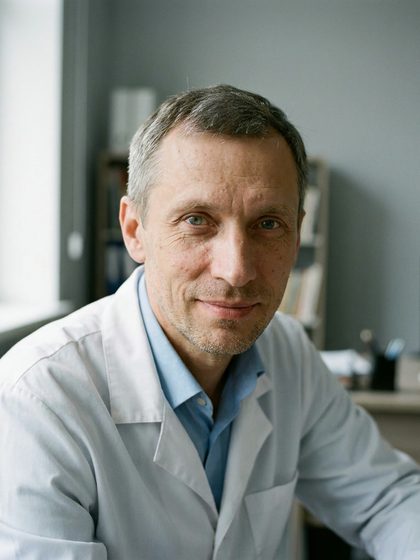
Reviewed byAndrey Vetrov, MDPsychiatrist · updated 11.11.2026
Key facts
- ICD-10 code
- F23
- Who provides care
- a psychiatrist from the mobile team; when needed, an addiction physician and an internist to rule out physical and toxic causes
- Format
- emergency home visits across Almaty and its suburbs, clinic appointments, and inpatient admission when indicated
- Duration
- a home assessment takes 1–2 hours; the acute phase lasts from several days to several weeks; follow-up continues for at least several months
- Confidentiality
- medical confidentiality, anonymous care, no entry in the state dispensary registry; an unmarked vehicle
- When it’s urgent
- aggression with a weapon, attempts at self-harm, attempts to jump from a window, high fever with confusion — call 103 or 112 immediately
- Outcome
- safety for the person and the family, a clear diagnosis, treatment underway, and a plan for further follow-up
What to know
The call usually sounds like this: “He hasn’t slept for three nights, he says the street cameras are watching him, he’s closed the curtains and won’t let anyone in.” People call from apartments in the Auezov district, from private houses in Nauryzbay, from summer cottages in the foothills. In acute psychosis, every hour counts, and the first thing a family needs to understand is this: you don’t have to handle it alone, and getting help doesn’t mean being forcibly locked up in a “psych ward.” The sooner the person is examined, the better the chance of avoiding the hospital altogether.
This page is only about the acute state: what to do right now, when to call 103 and when to call a psychiatrist to your home, and how the decision about inpatient care is made. Long-term treatment after an episode — if the psychosis turns out to be a manifestation of schizophrenia or bipolar disorder — is covered separately. Here there is one goal: to get safely through the first 24 hours and receive an accurate assessment from a doctor. Further care is planned once the cause of the episode becomes clear.
Signs of acute psychosis
- the person is convinced they are being watched, persecuted, or targeted by a conspiracy, and can’t be talked out of it
- they hear voices, talk to invisible companions, or seem to be listening to something
- they haven’t slept for several nights in a row yet don’t feel tired
- their speech is jumbled, their thoughts jump around, and they’re hard to understand
- sudden mood swings: fear, agitation, or aggression with no clear trigger
- they’ve stopped eating or drinking for fear of being “poisoned” or having something “slipped” into their food
- they’re disoriented in time and place and don’t recognize loved ones
If life is at risk — loss of consciousness, seizures, hallucinations, overdose, suicidal thoughts — call 103 or 112. Helpline for children and young people: 150.
What causes acute psychosis
Acute psychosis is a syndrome, not a standalone diagnosis. It can be caused by the onset of schizophrenia or bipolar disorder, acute and transient psychotic disorder (F23 in ICD-10), severe stress, or the postpartum period. Physical causes form an important group: infections with high fever, metabolic disorders, head injuries, and thyroid disease. That is why a psychiatrist always first rules out conditions that require care from an internist or neurologist.
Substance-related psychoses form a separate group: alcohol withdrawal (delirium tremens), use of stimulants and cannabis, and certain medications. In Almaty we often see episodes after weeks without sleep — IT deadlines, exam season, night shifts, combined with energy drinks and stimulants. It’s important for the doctor to know what preceded the episode: be honest — this information won’t be passed to the police and won’t be grounds for registry entry.
How a psychiatrist home visit for acute psychosis works
While the team is on its way — and with Almaty traffic that can take anywhere from 40 minutes to an hour and a half, longer to Kaskelen and Talgar — the on-call doctor will tell you over the phone how to talk to the person and what to put out of reach (knives, medications, car keys). On site, the psychiatrist talks with the patient, assesses the risk, checks blood pressure, pulse, and temperature, and asks the family about substances and medical conditions. Then comes the decision: treatment at home with daily monitoring, or hospitalization.
Acute psychosis is not managed at home if there is a risk of suicide or violence, refusal of food and water, clouded consciousness, high fever, signs of delirium after alcohol withdrawal, pregnancy, or the postpartum period. In these cases inpatient care is needed, and if there is a direct threat, call 103 or 112. Akalam doctors do not take anyone away by force: involuntary hospitalization is possible only by court order, following the procedure set by the laws of the Republic of Kazakhstan.
How we help
Risk assessment and safety
The first thing a psychiatrist does is assess the risk to the person and to those around them. The doctor speaks calmly, doesn’t argue with delusions, and doesn’t promise the impossible. Relatives are shown how to behave: don’t leave the person alone, don’t provoke them, and don’t “test” their beliefs. If the risk is high, the question of inpatient care is settled right away.
Ruling out physical and toxic causes
Temperature, blood pressure, a neurological exam, blood and urine tests, and, when needed, a drug screen and a neurology consultation. This is not a formality: psychosis caused by an infection or poisoning is treated differently from psychosis due to a mental disorder, and a mistake in the first 24 hours is costly. That’s why the team brings a blood pressure monitor, a glucose meter, and a pulse oximeter.
Treating the acute phase
Treatment is chosen only by the doctor: usually antipsychotics, and for severe agitation and insomnia, a short course of anti-anxiety medication. The goal of the first days is to restore sleep and reduce fear and agitation. Doses are tailored to the individual and are never given to the family over the phone “just in case.” We do not give medications left over at home without a doctor.
Follow-up after the episode
A single episode doesn’t always mean a chronic illness. But after acute psychosis, several months of psychiatric follow-up are needed — whether the condition comes back depends on it. We schedule a check-up in a few days, then every 1–2 weeks, and discuss the early signs of a repeat episode with the family. Some follow-up appointments can be held online.
How treatment works
- 01Call or WhatsAppThe administrator and the doctor on duty clarify the situation and tell you what to do right now.
- 02Examination or consultationThe doctor visits your home, sees you at the clinic or joins by video.
- 03Treatment planWe choose the format — at home, inpatient, psychotherapy or rehab — with a clear price.
- 04Ongoing supportYour doctor and psychotherapist stay in touch: follow-ups, family support and relapse prevention.
Myths and facts
MythPsychosis will pass on its own if the person just gets some sleep
FactSometimes an episode is brief, but without an examination it’s impossible to know the cause. Untreated psychosis due to an infection, delirium, or the onset of schizophrenia can become life-threatening. A psychiatric assessment is needed in any case.
MythCalling a psychiatrist always means the hospital and the registry
FactMany acute conditions are managed on an outpatient basis with daily monitoring. The decision on inpatient care is based on the person’s condition and made with the patient’s consent, and anonymous treatment involves no registry entry.
MythYou have to talk a person in psychosis out of their beliefs
FactArguing with delusions only increases anxiety and mistrust. It’s better to acknowledge their feelings — “I can see you’re scared” — and offer help without discussing the details of the delusional ideas. What matters most right now is sleep and safety.
Prices: Help with acute psychosis
| Help with acute psychosis | 40 000 ₸ |
| Psychiatrist consultation at the clinic | 15 990 ₸ |
| Psychiatrist home visit | 35 000 ₸ |
| Follow-up visit, treatment adjustment | 12 000 ₸ |
| Phone consultation | free |
Prices are approximate: the doctor confirms the exact cost after the examination, before treatment starts.
Confidential
We do not register patients with state dispensaries or share information with employers. You do not have to give your surname; doctors arrive in unmarked cars. Medical confidentiality is protected by the Code of Kazakhstan “On Public Health and the Healthcare System”.
Clinic addresses
FAQ
What should I do before the doctor arrives?
Stay close and speak calmly and briefly. Remove sharp objects, medications, and car keys. Don’t argue and don’t try to restrain the person by force. Make sure the team can get into the apartment. If the person is trying to harm themselves or others, don’t wait for the psychiatrist — call 103 or 112.
How quickly can a psychiatrist get to me in Almaty?
It depends on the district and traffic: the city center and the Bostandyk district are usually faster to reach, while Alatau, Nauryzbay, Kaskelen, and Boralday take longer, especially at rush hour. The dispatcher gives an estimated arrival time when you call. Home visits are available around the clock, including nights and weekends.
Can someone be hospitalized without their consent?
Only by court order, following the procedure set by the laws of the Republic of Kazakhstan, and only when there are grounds: danger to oneself or others, helplessness, or a threat of worsening health without treatment. A private clinic does not hospitalize anyone involuntarily. If there is a direct threat to life, call 103 or 112.
Is psychosis after substance use a job for an addiction physician or a psychiatrist?
Both. The psychiatrist evaluates the psychotic state, and the addiction physician evaluates intoxication or withdrawal. At Akalam they work together. Be honest about what the person used and when: this is needed for safe treatment, not for the police. It will also speed up help.
Can acute psychosis come back?
It can, especially if the cause is schizophrenia or bipolar disorder, if treatment is interrupted, or if the person keeps using substances. That’s why follow-up, a healthy sleep schedule, and a clear action plan for the first warning signs are so important after an episode.
How long does recovery from psychosis take?
With treatment, the acute phase usually passes within days or a few weeks. Full recovery — of sleep, concentration, and the ability to work — takes months. Responsibilities are brought back gradually: first a daily routine, then part-time study or work, under a doctor’s supervision.
Sources and review
Prepared by the Akalam medical editorial team based on:
- ICD-10 and ICD-11: mental and behavioural disorders
- Clinical protocols of the Ministry of Health of Kazakhstan
- Code of Kazakhstan “On Public Health and the Healthcare System”
- WHO: mental health and substance use
- NICE and APA clinical guidelines
This information is for reference and does not replace a doctor's consultation. Editorial policy