
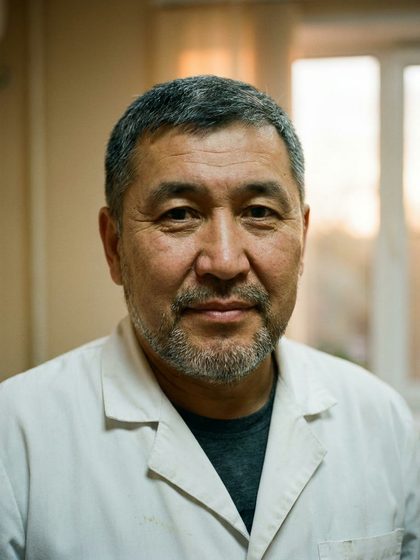
Reviewed byBaurzhan Kassymov, MDAddiction physician · updated 11.11.2026
Key facts
- Who provides care
- an addiction physician, with a nurse when needed; on request, a joint visit with a psychiatrist
- Where
- all districts of Almaty, from Medeu to Alatau, the suburbs, and dacha (country house) communities in the foothills
- Duration
- a visit lasts from 1 to 3 hours, depending on whether an IV drip and monitoring are needed
- Anonymity
- the physician arrives without a uniform or identifying markings, with no registration; your data is protected by medical confidentiality
- When it is urgent
- unconsciousness, seizures, delirium tremens, chest pain, or vomiting blood: call 103 or 112 immediately
- Outcome
- a medical assessment, relief of symptoms, a recommended treatment format, and an agreed next step
What to know
Calling an addiction physician to your home is, above all, a chance to get a medical assessment in the place where it is easiest for a person to accept help. Many people will not go to a clinic: they feel ashamed, they have no strength, they are afraid of running into someone they know, and in winter, when smog hangs over the city and the roads are jammed, a drive across town feels impossible. A physician who comes to the home removes these barriers and sees the real environment the patient lives in.
I want to be honest about how an addiction physician’s home visit differs from calling an ambulance. We do not replace 103 when there is a threat to life. Our task is scheduled and urgent addiction care: an examination, an IV drip if needed, a risk assessment, and a conversation with the patient and the family about what to do next. Sometimes the main result of a visit is not a procedure, but the person’s agreement to treatment, something the family could not achieve after years of persuasion.
When to Call an Addiction Physician to Your Home
- the person feels unwell after drinking or using but refuses to go to a clinic
- you need to know whether drinking or drug use can be stopped at home or whether it is time for inpatient care
- relatives do not understand how dangerous the condition is and want a doctor’s opinion
- an IV drip is needed for a hangover, intoxication, or after several days of drinking or use
- the person is willing to talk to a doctor, but only in their own home
- an elderly patient or someone with chronic illnesses who finds it hard to travel
- a follow-up visit is needed to check progress after treatment or at the start of therapy
If life is at risk — loss of consciousness, seizures, hallucinations, overdose, suicidal thoughts — call 103 or 112. Helpline for children and young people: 150.
What a Home Visit Offers and What It Cannot Replace
At home, the physician sees things that cannot be seen in a consulting room: how much alcohol or medication is within reach, how the patient lives, and who is around them. This helps the physician give realistic advice. In addition, many people find it easier to talk about the problem in familiar surroundings, without a waiting room and without strangers watching. For the family, the visit is a chance to ask questions that have been troubling them for a long time: is the condition dangerous, how should we talk to them, what should we avoid doing.
At the same time, a home visit has its limits. At home, there is no round-the-clock monitoring, no urgent lab testing, and no way to respond quickly if the person gets worse at night after the physician has left. If there is a risk of delirium tremens, seizures, or serious heart disease, the physician will honestly recommend inpatient care. The purpose of the visit is to choose a safe path, not necessarily to treat on the spot at any cost.
How an Addiction Physician Home Visit Works: Step by Step
When you call, the on-duty physician asks about the person’s condition, chronic illnesses, and current medications, and decides whether a visit is appropriate or whether 103 is needed first. Travel time within Almaty is usually 40–90 minutes, longer during rush hour and to the suburbs. On site, the physician measures blood pressure, pulse, and oxygen saturation, records an ECG, runs rapid tests, and sets up an IV drip if needed. Before leaving, the physician gives written recommendations, a plan, and arranges the next contact.
Treatment is not provided at home in cases of confusion, hallucinations, seizures, suspected heart attack or stroke, vomiting blood, or severe intoxication with an unknown substance, for pregnant women, or if the patient refuses help. In such cases, the physician arranges hospitalization or calls 103. The home format is also not suitable if there is no adult nearby who can keep an eye on the person.
How we help
Examination and risk assessment
The physician takes a medical history, assesses consciousness, blood pressure, pulse, and breathing, records an ECG, and, if needed, runs a rapid test for alcohol or drugs. Based on this, the physician determines how dangerous the condition is, whether care can continue at home, and what risks exist over the next 24 hours. This assessment is the basis for all further decisions.
IV drip and symptom relief
When indicated, the physician sets up an IV drip with detox solutions, B vitamins, liver-protecting agents, and medications to ease nausea, anxiety, and sleep problems. The composition is chosen based on the results of the examination. The procedure takes 1–2 hours, and the physician stays with the patient the whole time, monitoring how they feel.
Consultation for the patient and the family
Part of the visit is set aside for conversation: what is happening to the person, what treatment options exist, and what can be done as early as tomorrow. Relatives receive advice on how to behave, what to avoid, and when to call the physician. Sometimes it is this very conversation that helps the patient acknowledge the problem for the first time and agree to a program.
Referral to the next stage
At the end of the visit, the physician proposes a pathway: continued outpatient treatment, an inpatient stay, an addiction treatment program, or a consultation with a psychiatrist or psychotherapist. If hospitalization is needed, we help arrange transportation. A follow-up visit is agreed in advance to track progress and adjust the plan in time.
How treatment works
- 01Call or WhatsAppThe administrator and the doctor on duty clarify the situation and tell you what to do right now.
- 02Examination or consultationThe doctor visits your home, sees you at the clinic or joins by video.
- 03Treatment planWe choose the format — at home, inpatient, psychotherapy or rehab — with a clear price.
- 04Ongoing supportYour doctor and psychotherapist stay in touch: follow-ups, family support and relapse prevention.
Myths and facts
MythAn addiction physician only makes home visits for a drinking binge
FactHome visits are possible in many situations: after alcohol or drug use, to assess the person’s condition, for a follow-up check, or for a conversation with the patient and the family. It is a full medical consultation, not just an IV drip.
MythA private addiction physician can replace an ambulance
FactWhen there is a threat to life, such as unconsciousness, seizures, chest pain, or severe psychosis, an ambulance team at 103 is needed. A private physician provides urgent and scheduled care but does not replace emergency services, especially when getting to a suburb takes time.
MythA doctor can come and start treatment without the person’s consent
FactCare is provided to an adult only with their consent. An addiction physician can talk with the patient and relatives but does not use force or treat anyone against their will. Involuntary treatment is possible only by court decision in the manner established by the law of the Republic of Kazakhstan.
Prices: Addiction doctor home visit
| Addiction doctor home visit | 20 000 ₸ |
| Addiction doctor home visit: examination and advice | 20 000 ₸ |
| Repeat IV drip the next day | 20 000 ₸ |
| 24 hours in the inpatient unit | 45 000 ₸ |
| Phone consultation | free |
Prices are approximate: the doctor confirms the exact cost after the examination, before treatment starts.
Confidential
We do not register patients with state dispensaries or share information with employers. You do not have to give your surname; doctors arrive in unmarked cars. Medical confidentiality is protected by the Code of Kazakhstan “On Public Health and the Healthcare System”.
Clinic addresses
FAQ
How quickly will the addiction physician arrive?
Usually within 40–90 minutes of your call. It is faster in the central districts and slower in the Alatau, Nauryzbay, and Turksib districts and in evening traffic. Travel time to the suburbs, such as Kaskelen, Talgar, and Boralday, is longer. The on-duty physician will give you an accurate estimate when you call.
What should I prepare before the physician arrives?
A list of chronic illnesses and current medications, plus information about how much and for how long the person has been drinking or using. Put alcohol and medications out of reach. Prepare a place where the patient can lie down during the IV drip. Documents are not required; treatment is anonymous.
Will the neighbors find out that an addiction physician came?
No. Akalam physicians arrive in an ordinary car, without uniforms or identifying markings. The call can be booked under any name. Information about the visit is protected by medical confidentiality and is not shared with third parties, except in cases provided for by law.
Can I call a physician for an elderly relative?
Yes. For elderly people with chronic heart conditions, high blood pressure, or diabetes, traveling to a clinic is often riskier than seeing a doctor at home. In these cases, the physician assesses the risks especially carefully and may recommend inpatient care if home treatment is not safe.
How much does an addiction physician home visit cost?
The cost depends on the time of day, how far away the address is, and the scope of care: whether an IV drip, an ECG, or a follow-up visit is needed. A basic visit includes an examination and a consultation. The on-duty physician will tell you the exact cost before the visit, and current prices are listed in the price list on our website.
What if it turns out on site that inpatient care is needed?
The physician will explain the reasons and help arrange hospitalization: to the Akalam inpatient unit or, if there is a threat to life, through an ambulance team at 103. Treatment continues at home only when it is safe. The decision is made together with the patient and their relatives.
Sources and review
Prepared by the Akalam medical editorial team based on:
- ICD-10 and ICD-11: mental and behavioural disorders
- Clinical protocols of the Ministry of Health of Kazakhstan
- Code of Kazakhstan “On Public Health and the Healthcare System”
- WHO: mental health and substance use
- NICE and APA clinical guidelines
This information is for reference and does not replace a doctor's consultation. Editorial policy