
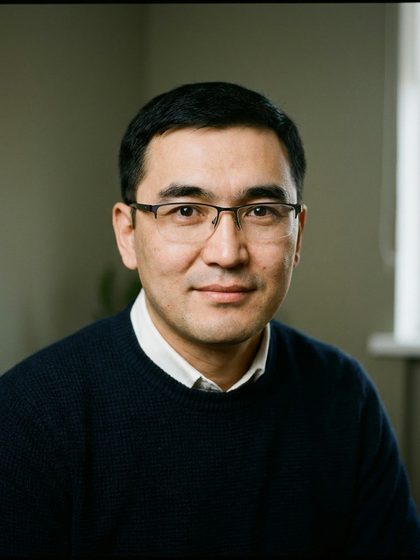
Reviewed byTimur Abdrakhmanov, MDPsychotherapist · updated 11.11.2026
Key facts
- Who provides care
- chemical dependency counselors and a psychotherapist; medical supervision by an addiction physician
- Where
- in the rehab unit in Almaty, then in local AA, NA, and family groups across the city
- Duration
- the first 4–5 steps are usually completed during the inpatient course, then months and years in the fellowship
- Anonymity
- medical confidentiality in the unit; in groups, the principle of anonymity — only first names are used
- When it is urgent
- a drinking binge, severe withdrawal, overdose, psychosis, or suicidal thoughts — call 103 or 112 first
- Outcome
- support from the fellowship, everyday tools for staying sober, a sponsor, and a clear plan of action
What to know
Many people in Almaty have heard of the “12 steps,” but the picture is often vague: “some kind of meetings where people take turns talking.” In reality, it is a consistent process of personal work with a clear logic. The person admits they have lost control over their drinking or drug use, accepts support, honestly examines their actions, makes amends where possible, and then helps newcomers. Every step involves written assignments and conversations with a mentor, called a sponsor.
The 12-step model is not a medical treatment, and we say so plainly. However, NICE and WHO guidance mentions participation in mutual support groups as a useful addition to addiction treatment, and the twelve-step facilitation approach has been studied in clinical trials. At Akalam, the program is built into rehab: the doctor and psychotherapist are responsible for the medical and psychological side, and the addiction counselor guides the step work.
Who the 12-Step Program Is For
- people who have already tried to quit on their own and realized they cannot stay sober alone
- people who value support from others who have been down a similar road
- those who are afraid of being left without support and a familiar circle after discharge
- people with alcohol, drug, or gambling addiction
- those ready for regular written work and honest conversations
- relatives — through groups for loved ones of people with addiction
- those for whom medication and short courses of treatment have not been enough
If life is at risk — loss of consciousness, seizures, hallucinations, overdose, suicidal thoughts — call 103 or 112. Helpline for children and young people: 150.
Why a Fellowship Helps People Stay Sober
Addiction almost always comes with isolation: the person hides their use, drifts away from loved ones, and their circle shrinks to the people they drink or use with. A mutual support group creates a new environment where sobriety is the norm, not something odd. Here you can say “I’m having a hard day today” without fear of judgment and get advice from someone who was in the same place a year or ten years ago.
The program’s second strength is structure. On a hard evening, when cravings hit after work and the traffic on Raiymbek Avenue, the person has clear actions to take: call their sponsor, go to a meeting, reread their notes. Almaty has AA and NA groups in Russian and Kazakh, as well as online meetings, so finding a meeting is easy both for those who live in the city center and for those in Talgar or Boraldai.
How the 12-Step Program Works
First, the addiction physician makes sure the person is physically stable and arranges detox if needed. Then, in the unit, a counselor introduces the patient to the program, and they begin the first steps: written assignments, daily groups, and reviews with the counselor. In parallel, there are sessions with a psychotherapist covering what the program does not address: anxiety, trauma, family conflicts. Before discharge, we help the person find groups in Almaty and a sponsor; the first meetings can be attended online.
The program is not suitable as first aid during a binge, severe withdrawal, or acute psychosis — these require medical care, and if life is at risk, call 103 or 112 immediately. For people with a serious mental illness, step work is coordinated with a psychiatrist, and prescribed treatment is not stopped: groups do not replace medication and are not set against it. If the spiritual side of the program does not resonate with someone, we offer secular alternatives.
How we help
Step Work With a Counselor
Each step involves reading the literature, writing answers to questions, and discussing them with the counselor. For example, in Step Four the person makes an honest inventory of their resentments, fears, and actions. The counselor helps them avoid self-flagellation without skipping painful topics. The pace is individual: rushing through the steps just to check a box is pointless.
Group Meetings
The unit holds daily meetings modeled on AA and NA: participants share their experience on a topic while the chair keeps time and makes sure the rules are followed. This prepares people for attending city groups after discharge: they already know the format, are not afraid to speak, and understand why they are going, instead of arriving at their first meeting feeling lost.
Psychotherapy Alongside the Program
Addiction counselors do not work with deep psychological trauma, depression, or serious family conflicts — that is the psychotherapist’s area. So at Akalam, the program is combined with individual CBT or other methods. This combination draws on the strengths of both approaches and avoids overloading the group with issues that require a specialist.
Support After Discharge
In the first months after inpatient treatment, we hold alumni meetings and help people settle into city groups. If someone stops showing up at meetings, the case manager gets in touch — of course, only if the person has agreed to this kind of contact. Relatives have their own groups based on the 12-step principles, where they learn to take care of themselves, not just their loved one with addiction.
How treatment works
- 01Call or WhatsAppThe administrator and the doctor on duty clarify the situation and tell you what to do right now.
- 02Examination or consultationThe doctor visits your home, sees you at the clinic or joins by video.
- 03Treatment planWe choose the format — at home, inpatient, psychotherapy or rehab — with a clear price.
- 04Ongoing supportYour doctor and psychotherapist stay in touch: follow-ups, family support and relapse prevention.
Myths and facts
MythThe 12 steps are a cult or a religion
FactThe program is not tied to any particular religion, there are no membership fees or obligations, and you can leave at any time. Everyone understands the idea of a “Higher Power” in their own way, including as the power of the group. If the spiritual aspect does not resonate, we offer secular forms of support.
MythMutual support groups replace treatment
FactMeetings do not replace medical care for withdrawal, psychiatric treatment, or psychotherapy. They are a form of support that works well alongside them. You should never stop prescribed medication because “someone in the group said so” — only a doctor makes these decisions.
MythAt meetings you’ll be made to tell everything about yourself
FactEach participant decides what to say and when, and you can simply listen. There is no need to give your last name, workplace, or other details. Anonymity is the foundation of these fellowships: what is said at a meeting stays at the meeting.
Prices: 12-step program
| 12-step program | 250 000 ₸ / month |
| Residential rehab, per month | 299 000 ₸ |
| Outpatient program, per month | 120 000 ₸ |
| Consultation to choose a program | free |
| Phone consultation | free |
Prices are approximate: the doctor confirms the exact cost after the examination, before treatment starts.
Confidential
We do not register patients with state dispensaries or share information with employers. You do not have to give your surname; doctors arrive in unmarked cars. Medical confidentiality is protected by the Code of Kazakhstan “On Public Health and the Healthcare System”.
Clinic addresses
FAQ
How long does it take to complete all 12 steps?
There are no fixed deadlines. During a rehab course, people usually get through the first four or five steps. They work the rest in the fellowship with a sponsor, and for some this takes a year, for others longer. Many keep going to meetings for years because it helps them stay sober.
Where are AA and NA meetings held in Almaty?
Groups meet in different parts of the city — in the center and in the Bostandyk, Auezov, and Medeu districts — and there are also meetings in the suburbs and online. The fellowships publish their own up-to-date schedules. Before discharge, we help the patient choose groups close to home or work, so that commuting through traffic does not become an excuse to skip meetings.
Does the program work for gambling addiction?
Yes, there are Gamblers Anonymous fellowships that follow the same model. For people with a gambling addiction, we combine step work with psychotherapy, a review of the financial consequences, and family involvement. If gambling is combined with alcohol or other substances, we adapt the program to address both problems.
Do I have to believe in God to work the steps?
No. The program talks about “a Higher Power as we understand it,” and many members understand this as the support of the group, a set of principles, or simply something stronger than their addiction. Almaty’s fellowships include people of different faiths as well as non-believers. What matters is a willingness to work on yourself honestly.
Will I be anonymous in the group?
In groups, it is customary to use only a first name, sometimes a made-up one, and not to discuss members outside meetings. At the clinic, medical confidentiality also applies: patient information is not shared with employers or schools. Exceptions are provided for only by Kazakhstan law.
Can relatives take part in the program?
Yes, there are separate fellowships for loved ones based on the 12-step principles — Al-Anon, Nar-Anon, and similar groups. There, relatives learn to separate their own lives from their loved one’s addiction and stop spending all their energy on control. With us, family members also receive consultations with a psychologist and family sessions.
Sources and review
Prepared by the Akalam medical editorial team based on:
- ICD-10 and ICD-11: mental and behavioural disorders
- Clinical protocols of the Ministry of Health of Kazakhstan
- Code of Kazakhstan “On Public Health and the Healthcare System”
- WHO: mental health and substance use
- NICE and APA clinical guidelines
This information is for reference and does not replace a doctor's consultation. Editorial policy