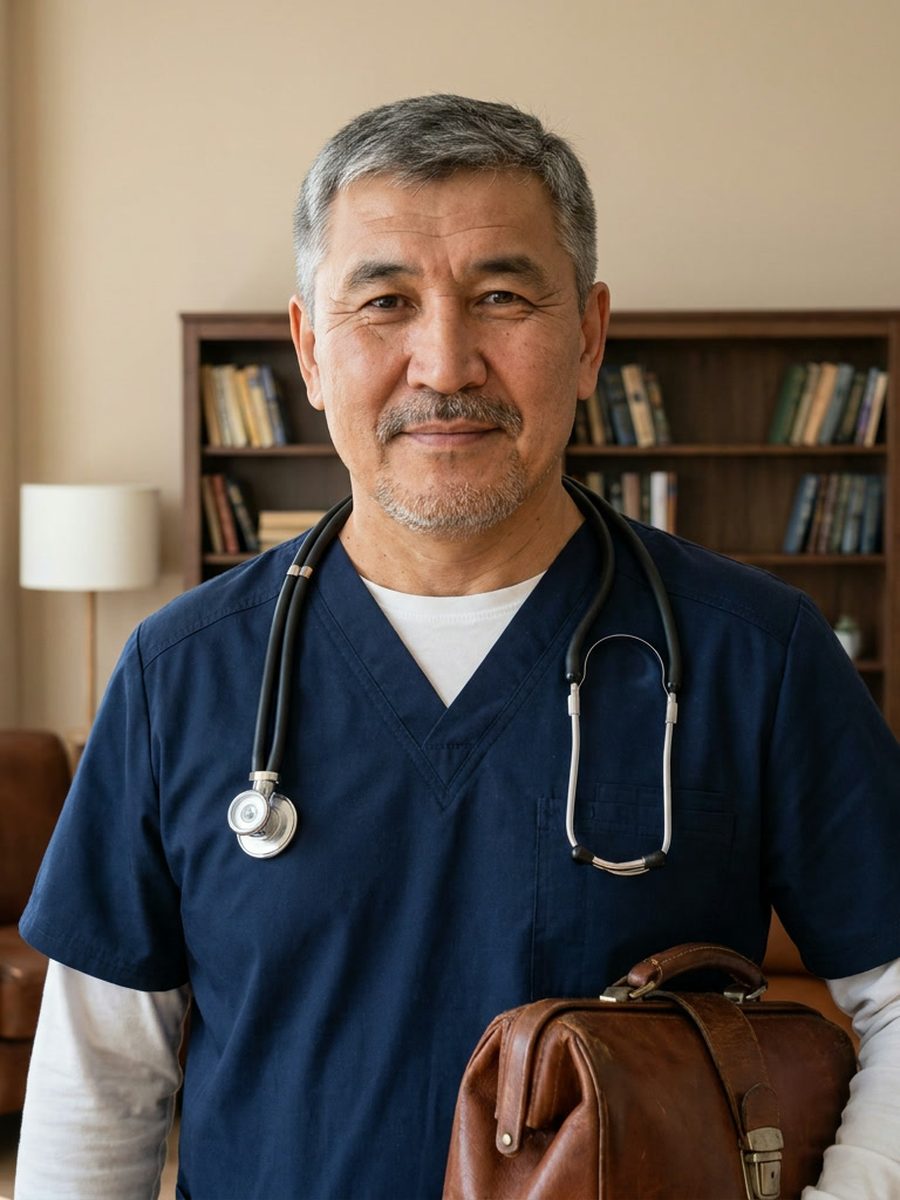
Reviewed byBaurzhan Kassymov, MDAddiction physician · updated 11.11.2026
Key facts
- ICD-10 code
- F10–F19
- Who provides it
- An addiction physician, a psychiatrist, psychotherapists, psychologists, chemical dependency counselors and nurses; a lead specialist coordinates the individual plan
- Where
- A residential rehabilitation center for patients from Almaty and its suburbs; admission and the initial assessment take place at our clinic in the city
- Duration
- The core program is 28–90 days, up to 6 months for severe addiction, followed by outpatient aftercare and social reintegration
- Anonymity
- Paid anonymous treatment with no entry in the state dispensary registry for addiction, and medical confidentiality under the Code of the Republic of Kazakhstan “On Public Health and the Healthcare System”
- When it is urgent
- Seizures, delirium, overdose, chest pain, vomiting blood or suicidal thoughts: call 103 or 112 first, and decide on rehab afterward
- Outcome
- A period of stable sobriety, an understanding of how relapse happens, skills for coping with cravings and stress, and a plan for life after discharge
What to know
Relatives who call a rehabilitation center have usually been through everything already: IV drips at home, alcohol “coding” (an aversion therapy widely used in Kazakhstan and CIS countries), promises and relapses. They ask what will happen there, whether it is like a prison and how a rehab center differs from an inpatient addiction unit. I will answer as a doctor who has been referring patients from Almaty to rehab for many years: an inpatient unit relieves the acute state in a matter of days, while a rehabilitation center helps build a life without the substance over months.
A rehabilitation center is, above all, an environment. For a while, the person steps out of their usual circle: the friends they drank or used with, a job with constant stress, routes around the city where every courtyard is tied to memories. Many centers serving Almaty residents are located in the suburbs and foothills, away from the city noise and winter smog. The key thing to understand is this: people enter rehab voluntarily, and the program only works when the person takes an active part in it.
When Someone Needs a Rehab Center
- relapses keep happening after IV drips and coding, and sober periods are getting shorter
- the person cannot stop using while they remain in their usual environment and social circle
- the addiction has led to job loss, debt, legal problems or the breakdown of the family
- several attempts at outpatient treatment have not produced a lasting result
- the addiction is combined with depression, anxiety or other mental disorders
- there is no safe, sober environment at home: relatives, neighbors or friends drink or use
- the person acknowledges the problem and is ready to change their life for a while
If life is at risk — loss of consciousness, seizures, hallucinations, overdose, suicidal thoughts — call 103 or 112. Helpline for children and young people: 150.
Why Detox Alone Is Not Enough
ICD-10 describes addiction under F10–F19 as a dependence syndrome that includes cravings, loss of control, tolerance and continued use despite harm. Detox relieves withdrawal, but it does not remove cravings, habitual ways of coping with stress or the environment that keeps the use going. That is why relapse is common after a single IV drip. The WHO and international guidelines regard addiction as a chronic condition that requires long-term support.
Rehabilitation works with what remains after detox: thoughts, emotions, relationships and lifestyle. In a big city this is especially important. In Almaty, alcohol and other substances are easy to obtain, corporate culture often revolves around feasts and drinking, and loneliness in a big city pushes people toward using. A center provides a period free of these triggers, during which the person can learn new responses before returning to their usual pace of life.
How Admission and the Program Work
It starts with a phone call or an online consultation for the family: a specialist learns about the history of use and previous treatment. Then the person comes for an in-person assessment by an addiction physician and a psychiatrist at our clinic in Almaty: lab tests, an ECG and an evaluation of their condition. If necessary, inpatient detox is carried out first. After that, the person signs an informed consent form and moves to the center. There, an individual plan is drawn up: a daily schedule, group and individual sessions, work therapy, sports and family meetings.
A rehabilitation center is not the place to treat acute conditions: alcohol withdrawal delirium (delirium tremens), seizures, severe intoxication or acute psychosis require calling 103 and admission to a hospital. Decompensated physical illnesses and pregnancy require special conditions. An adult is never placed in rehab by force: involuntary treatment is possible only by court order, in the manner established by the law of the Republic of Kazakhstan.
How we help
Medical Care
At the start, doctors assess the person’s physical and mental condition, carry out detox if needed and prescribe treatment for co-occurring illnesses. Throughout the program, the addiction physician and psychiatrist monitor sleep, anxiety, depression and cravings. Medication is prescribed only when indicated and only by a doctor. This is what sets a clinic-based center apart from non-medical “rehabs” where no doctors work.
Psychotherapy and Counseling
Daily group sessions and regular individual sessions with a psychotherapist or psychologist. Methods include cognitive behavioral therapy (CBT), motivational interviewing, relapse prevention and elements of the 12-step program. Patients keep a journal, work through their own history and learn to recognize the thoughts and situations that lead to use. Counselors with lived experience of recovery share how they coped themselves.
Daily Routine and Work Therapy
Wake-up, morning exercise, breakfast, groups, lunch, individual work, household duties, sports, an evening group and lights-out. A clear routine restores the sleep and daily rhythm disrupted by substance use. Work therapy, such as grounds maintenance, kitchen duty and minor repairs, brings back a sense of being useful. Walks in the fresh air of the foothills become part of the program rather than a reward.
Family Involvement
Relatives take part in family consultations and learn about the illness and how to support sobriety after discharge. Visits and calls are arranged according to the center’s rules, usually after the first weeks of adjustment. At the same time, the family is offered codependency counseling. Without changes in the family, the risk of relapse after returning home is noticeably higher.
How treatment works
- 01Call or WhatsAppThe administrator and the doctor on duty clarify the situation and tell you what to do right now.
- 02Examination or consultationThe doctor visits your home, sees you at the clinic or joins by video.
- 03Treatment planWe choose the format — at home, inpatient, psychotherapy or rehab — with a clear price.
- 04Ongoing supportYour doctor and psychotherapist stay in touch: follow-ups, family support and relapse prevention.
Myths and facts
MythYou can bring a person to a rehab center against their will
FactAn adult is not treated without consent. Involuntary treatment is possible only by court order, in the manner established by the law of the Republic of Kazakhstan. If the person is not ready, a consultation with an addiction physician and motivational work can help the family.
MythRehab means isolation and prohibitions
FactRestrictions on alcohol, substances and phone use in the first days are needed for safety and to focus on the program. Most of the time is spent in sessions, socializing, sports and personal work, not in punishment.
MythAfter rehab, a person will never relapse again
FactAddiction is a chronic condition, and an honest center does not promise lifelong results. The program lowers the risk of relapse and teaches what to do if cravings come back. Support after discharge is essential.
Prices: Rehab center
| Rehab center | |
| Residential rehab, per month | 299 000 ₸ |
| Outpatient program, per month | 120 000 ₸ |
| Consultation to choose a program | free |
| Phone consultation | free |
Prices are approximate: the doctor confirms the exact cost after the examination, before treatment starts.
Confidential
We do not register patients with state dispensaries or share information with employers. You do not have to give your surname; doctors arrive in unmarked cars. Medical confidentiality is protected by the Code of Kazakhstan “On Public Health and the Healthcare System”.
Clinic addresses
FAQ
How long does the program last?
The core program usually lasts 28–90 days, and up to 6 months for severe, long-standing addiction. The length is determined after the assessment and reviewed along the way. After the residential stage, outpatient aftercare and social reintegration are recommended to consolidate the results in everyday life.
What should I bring to the center?
An identity document, comfortable clothes and shoes for several days, warm clothing for walks, alcohol-free toiletries, a list of the medications you take and your medical records. Valuables, alcohol and non-prescribed medications are not allowed. The Akalam administrator will send you the full list before admission.
Can we visit the patient?
Yes, but usually after the adjustment period, the first 1–2 weeks, when it is important for the person to settle into the program. Visits follow a schedule and are often combined with a family consultation. Phone calls are also arranged according to the center’s rules so as not to disrupt the work.
What if the person wants to leave early?
The stay is voluntary, and no one has the right to hold an adult by force. If a patient wants to leave, specialists talk with them, explore the reasons and involve the family. The urge to leave is often part of the crisis of the first weeks, and after a conversation the person stays. If the decision is final, they are discharged with recommendations.
How is anonymity maintained?
Treatment is provided on a paid, anonymous basis with no entry in the state dispensary registry. Information about the stay at the center is protected by medical confidentiality and is not shared with employers. Disclosure is possible only in cases expressly provided for by law, for example at the request of a court.
How is a rehabilitation center different from an inpatient addiction unit?
An inpatient unit is designed for a few days: to stop a drinking binge or relieve withdrawal and stabilize the person’s condition. A rehabilitation center starts after that and lasts weeks or months: psychotherapy, skills for sober living and family work. Patients often go through both stages one after the other.
Sources and review
Prepared by the Akalam medical editorial team based on:
- ICD-10 and ICD-11: mental and behavioural disorders
- Clinical protocols of the Ministry of Health of Kazakhstan
- Code of Kazakhstan “On Public Health and the Healthcare System”
- WHO: mental health and substance use
- NICE and APA clinical guidelines
This information is for reference and does not replace a doctor's consultation. Editorial policy